

Pakistan’s IT Exports Are Growing: Is Workplace Infrastructure Keeping Up?
Pakistan earned a record $4.6 billion from IT and IT-enabled services exports in FY2025-26, about 21% more than the $3.81 billion earned a year earlier, according to State Bank of Pakistan data reported by The Express Tribune and Business Recorder. That growth is good news for software houses in Lahore. It also creates a practical question that the export headlines skip: can the offices these companies work from support the next stage of growth?
Export work is delivered on deadlines set by clients in other time zones. A team that loses power, drops a client call, or runs out of seats does not just lose a few hours. It risks the contract. This article looks at what the export numbers say, why they put pressure on the workplace, and how to check whether your own office is keeping up.
How much does Pakistan earn from IT exports?
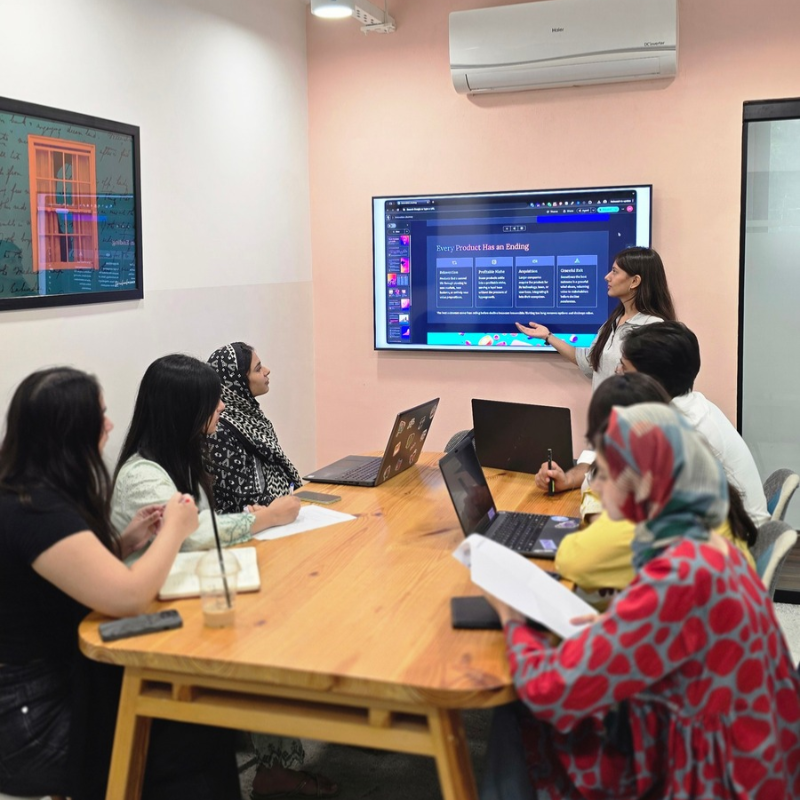
Pakistan’s IT exports are the earnings recorded by the State Bank of Pakistan under the “telecommunications, computer and information services” category of services exports. They include software development, IT services, IT-enabled services, and freelance earnings received through formal channels.
| Fiscal year (July–June) | IT and ITeS exports | Change |
|---|---|---|
| FY2024-25 | $3.814 billion | — |
| FY2025-26 | $4.600 billion | about +21% |
Source: SBP balance of payments data as reported by The Express Tribune, 18 July 2026.
Two more figures put that in context. IT exports made up roughly 46% of Pakistan’s $10.03 billion services exports in FY2025-26, and the April–June 2026 quarter alone brought in about $1.21 billion. The government had targeted $5 billion for the year, so the sector grew strongly but fell short of its target.
Who is driving the growth?
Registered IT companies
The Ministry of IT and Telecommunication reported 20,711 IT and ITeS companies registered with the Pakistan Software Export Board (PSEB) as of May 2025, with 10,745 of them, about 52%, in Punjab. Other 2026 counts exist, but they come from different registries (for example, SECP company registrations), so they are not directly comparable with the PSEB figure. If you see very different numbers quoted, check which registry and which date they refer to.
Freelancers and small teams becoming companies
Freelancers remain a large part of the story. SBP data reported in June 2026 showed freelancers earning just over $1 billion in July–May FY2025-26. Many of the firms that now hire 10, 20 or 50 people started as one or two freelancers. The move from a laptop at home to a registered company with salaried staff is usually where office needs first appear.
Where the buyers are
The Pakistan Software Houses Association (P@SHA) has said the United States and the Middle East together account for around 75% of Pakistan’s IT market. That matters for the workplace: much of the work happens in the evening and night hours in Pakistan, and clients from these markets expect video calls to connect on time and visits to happen in a professional setting.
Why export growth puts pressure on the workplace
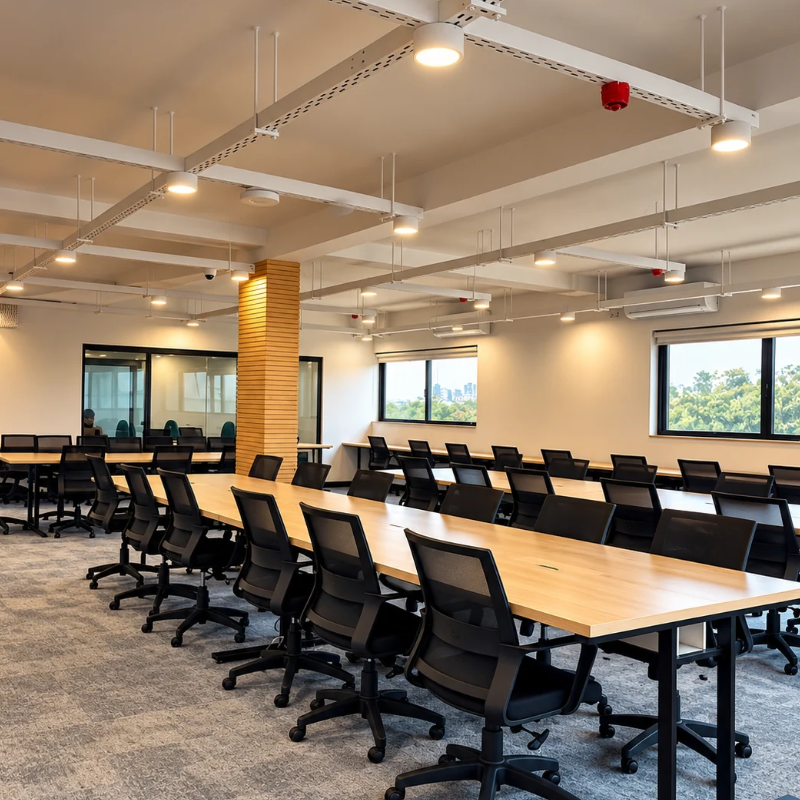
Revenue growth in an IT company usually means more people. More people means more seats, more meeting time, and more load on power and internet. At the same time, the stakes rise. A ten-person team working for one local client can absorb a bad day. A forty-person team delivering to three foreign clients under service-level agreements cannot.
In practice, workplace problems show up in a predictable order: first the internet, then power, then the lack of a quiet room for client calls, then the lack of seats for new hires. Each one is fixable on its own. The difficulty is that a growing company often deals with them one at a time, after they have already caused a missed deadline.
Five infrastructure gaps that slow IT teams in Lahore
1. Power continuity
Load-shedding remained a business issue in 2026. Reporting in Dawn, The Express Tribune and Profit described shortfalls of 4,000 MW or more at several points in the year, with Lahore residents facing 8–10 hours of cuts in January and consumers still reporting three to four hours of load-shedding in October, even when LESCO said there was none scheduled. For an export team, the question is not whether the grid will fail but whether the office switches to backup without dropping a call or a deployment. Ask any landlord or operator what the backup covers (lights only, or workstations, network and air conditioning) and for how long.
2. Internet redundancy
One fibre line is a single point of failure. A workplace that supports export work needs at least two independent connections, ideally from different providers, with automatic failover. Ask whether the network is shared with other tenants and how bandwidth is managed at peak hours, and test it during the hours your team actually works.
3. Space for client calls and site visits
Foreign clients increasingly ask to meet the team, either on video or in person during a visit to Pakistan. A shared table in an open room does not work for a contract negotiation or a sprint demo. Teams need access to a closed meeting room for daily calls and a boardroom for presentations, without having to book a hotel conference room.
4. Room to add seats
Hiring rarely happens in neat blocks. A company may add three developers this quarter and eight the next. A conventional lease fixes the floor area for years. If you outgrow it, you either crowd people in or move. Ask whether a provider can offer a larger room in the same building when you need it, and what notice you have to give.
5. Security and access control
Clients in regulated sectors increasingly ask vendors about physical security: who can enter the office, whether there is CCTV, whether screens and documents are visible to visitors. A lockable private room, member-only access and a clear visitor policy make those questionnaires easier to answer.
A workplace readiness checklist for IT companies
Use this list to assess your current office, or any space you visit:
- Power: What does the backup cover, how quickly does it switch over, and has it held up during the last load-shedding cycle?
- Internet: Are there two independent connections with failover? Is the speed acceptable during the hours your team works?
- Meeting rooms: Can you get a closed room for a client call at short notice? Is there a room large enough for a presentation?
- Seats: How many people can you add in the next 12 months without moving? What happens if you need more?
- Access hours: Can staff work late for US clients or early for Gulf clients?
- Security: Is the office lockable? Is there CCTV and controlled entry?
- Commute: Can your team, including new hires, reach the office reliably?
- Address: Is it an address you are comfortable putting on proposals and client visits?
If you answer “no” or “not sure” to three or more, your workplace is probably not keeping pace with your growth.
Where QuickOffice fits
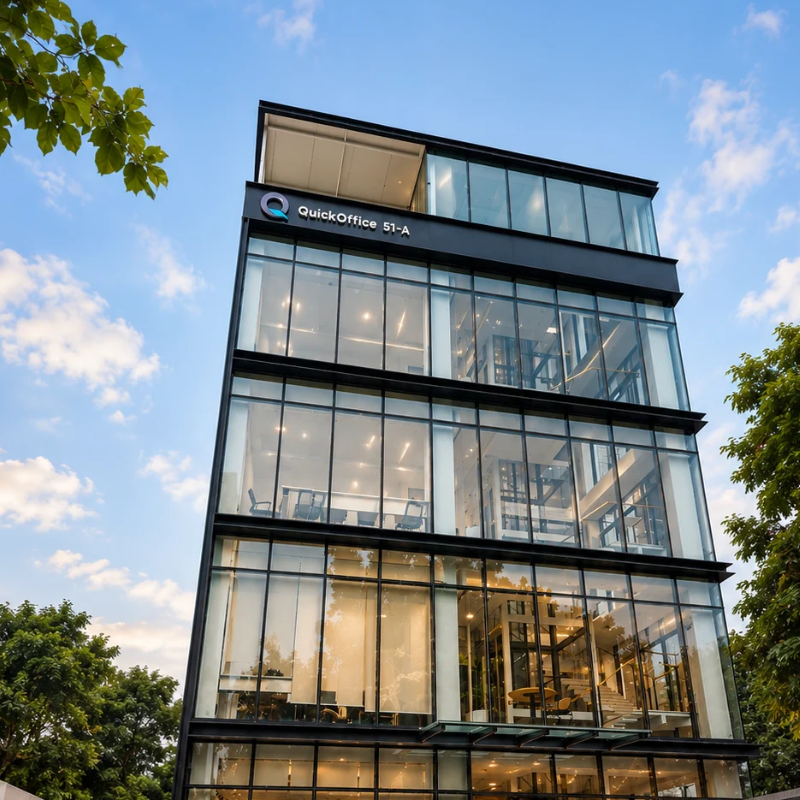
QuickOffice runs three managed workspaces in Lahore: QuickOffice Fortress at 304 Upper Mall (near Fortress Stadium and Canal Road), Main Gulberg at 29-D Main Gulberg, and Off MM Alam at 51-A Gulberg III. Its furnished private offices come with high-speed internet, power backup, air conditioning, reception, CCTV, and member-only access, plus access to meeting rooms booked by the hour and a boardroom for client presentations. At Fortress, private offices range from 4-seat rooms up to larger suites, and an enterprise floor for 30 or more seats is available for bigger teams.
If cost is your first question, our guide to what a private office costs in Lahore sets out the published starting rate and what it includes. The best test, though, is practical: book a visit, bring a laptop, and check the internet and backup during the hours your team actually works.